Hi, I'm Kieran ๐Ÿ‘‹

Engineer, researcher,

lifelong learner

I currently work as an ML + Quant Researcher at a hedge fund startup, applying machine learning to financial markets. I hold a Ph.D. from Vanderbilt University, where as an NSF Graduate Research Fellow I developed physics-based, graph-theoretic, and algebraic methods for the autonomous design of polymers and solvents.


About Me

I am an ML + Quant Researcher at a hedge fund startup, where I apply machine learning to financial markets and engineer the software around it. I earned my PhD at Vanderbilt University in Interdisciplinary Materials Science, a multidisciplinary domain that, for me, was roughly a culmination of computer science and physical materials.

I value truth, hard work, and passion, and I'm motivated by making a change in the world โ€” I became an engineer because I wanted to manifest my ideas. Outside of work, my main pursuit is jiu jitsu, where I'm a three-stripe blue belt, and I've previously competed in wrestling and Olympic weightlifting. I'm currently based in Nashville, TN.

I hold undergraduate degrees in Materials Science Engineering and Statistics, with minors in Computational Modeling and Computer Science. I love integrating cross-disciplinary skills to build things that matter.

Portrait of Kieran Nehil-Puleo

Flagship Projects

Grouper: Symmetry-Aware Functional-Group Graph Representations for Generative Exploration of Chemical Space

Grouper: Symmetry-Aware Functional-Group Graph Representations for Generative Exploration of Chemical Space

2026-08-27

What was the problem?

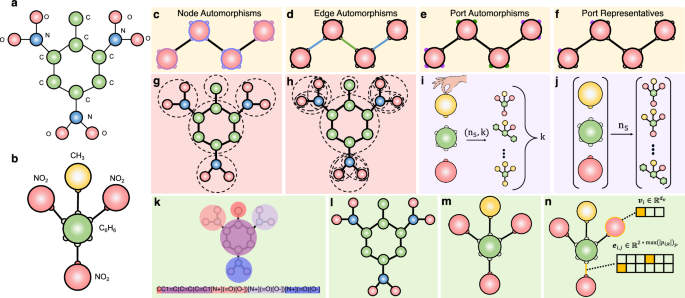
Chemical space is astronomically large, and enumerating candidate molecules atom-by-atom wastes most of the effort on duplicates โ€” structures that are symmetry-equivalent to ones already generated. That redundancy makes exhaustive, verifiable design of new molecules computationally intractable.

What did I do?

Built Grouper, a symmetry-aware hierarchical representation that describes molecules as graphs of functional groups and collapses symmetry-equivalent configurations. Paired with combinatorial and algebraic methods (including Pรณlya enumeration theory) and scalable parallel code, it generates and analyzes chemical spaces end-to-end while staying interoperable with simulation formats and data-driven models.

What was the impact?

Cut isomorphism checks by nearly 99% versus naive enumeration near the exhaustive limit, making previously untenable strategies such as exhaustive design tractable and verifiable. Demonstrated on solubility optimization and polymer functionalization, and published as first author in npj Computational Materials.

PublicationGraph TheoryGroup TheoryGenerative Molecular Design
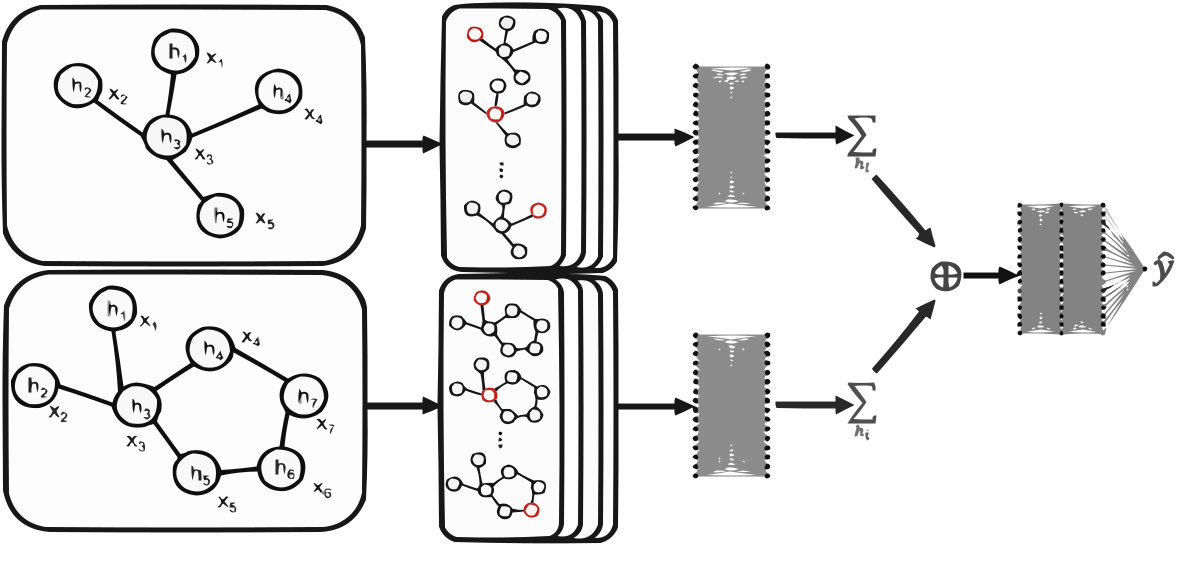
E(n) Equivariant Graph Neural Network for Learning Interactional Properties of Heterogeneous Molecular Structures

E(n) Equivariant Graph Neural Network for Learning Interactional Properties of Heterogeneous Molecular Structures

2023-12-13

What was the problem?

Predicting chemical properties from 3D molecular structures is computationally expensive. Existing models often don't respect the symmetries of the physical world, leading to inefficiencies.

What did I do?

Developed an E(n) equivariant graph neural network (IEGNN) that incorporates spatial features and respects physical symmetries (E(n) equivariance), allowing for more efficient and accurate learning from 3D molecular data.

What was the impact?

The IEGNN provides a more efficient way to predict chemical properties, which can accelerate the discovery of new materials and molecules. This work was published in the Journal of Physical Chemistry B.

PublicationEquivariant Graph Neural NetworksMolecular Dynamics
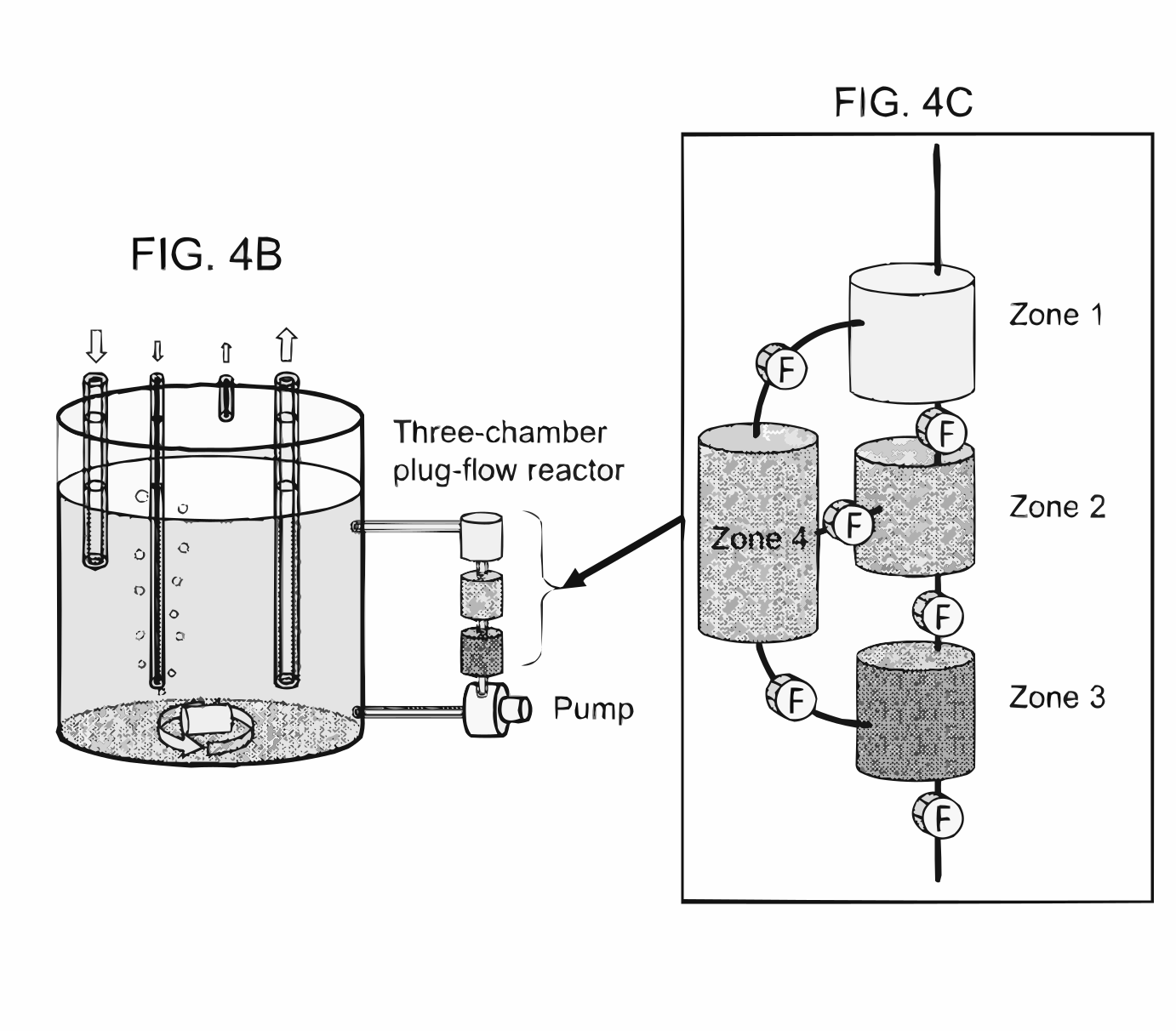
Dynamically interconnected microbioreactors and their applications

Dynamically interconnected microbioreactors and their applications

2024-04-11

What was the problem?

Scaling up biological production from the lab to industrial scale is challenging because environmental conditions in large bioreactors are not uniform. This makes it difficult to optimize cell lines for efficient bioproduction.

What did I do?

Invented a system of dynamically interconnected microbioreactors that can simulate the heterogeneous conditions of large-scale industrial bioreactors. This allows for more realistic and effective optimization of cell lines.

What was the impact?

This invention, now a patent, provides a new tool for bioprocess development, potentially leading to more efficient and scalable production of biofuels, pharmaceuticals, and other bio-based products.

PatentInterconnection networksMicrofluidics

Other Projects

Open-source Powder Dispenser

Open-source Powder Dispenser

2021-11-15

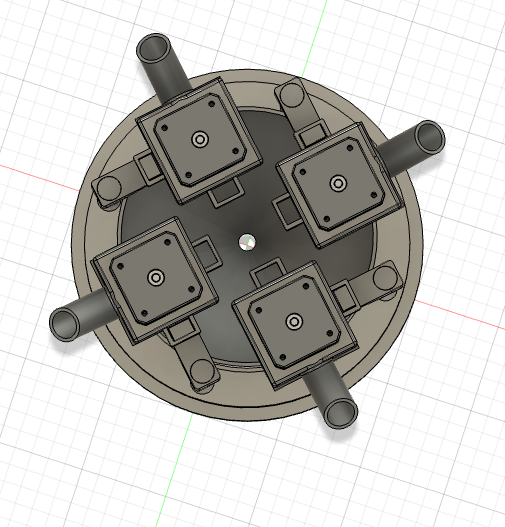
A low-cost, open-source powder dispenser built with 3D printing and off-the-shelf components, giving precise control over the composition and mass of multi-component powder formulations.

Autonomous ExperimentationHardware3D Printing
Explore
Petri Net Design Studio

Petri Net Design Studio

2022-05-20

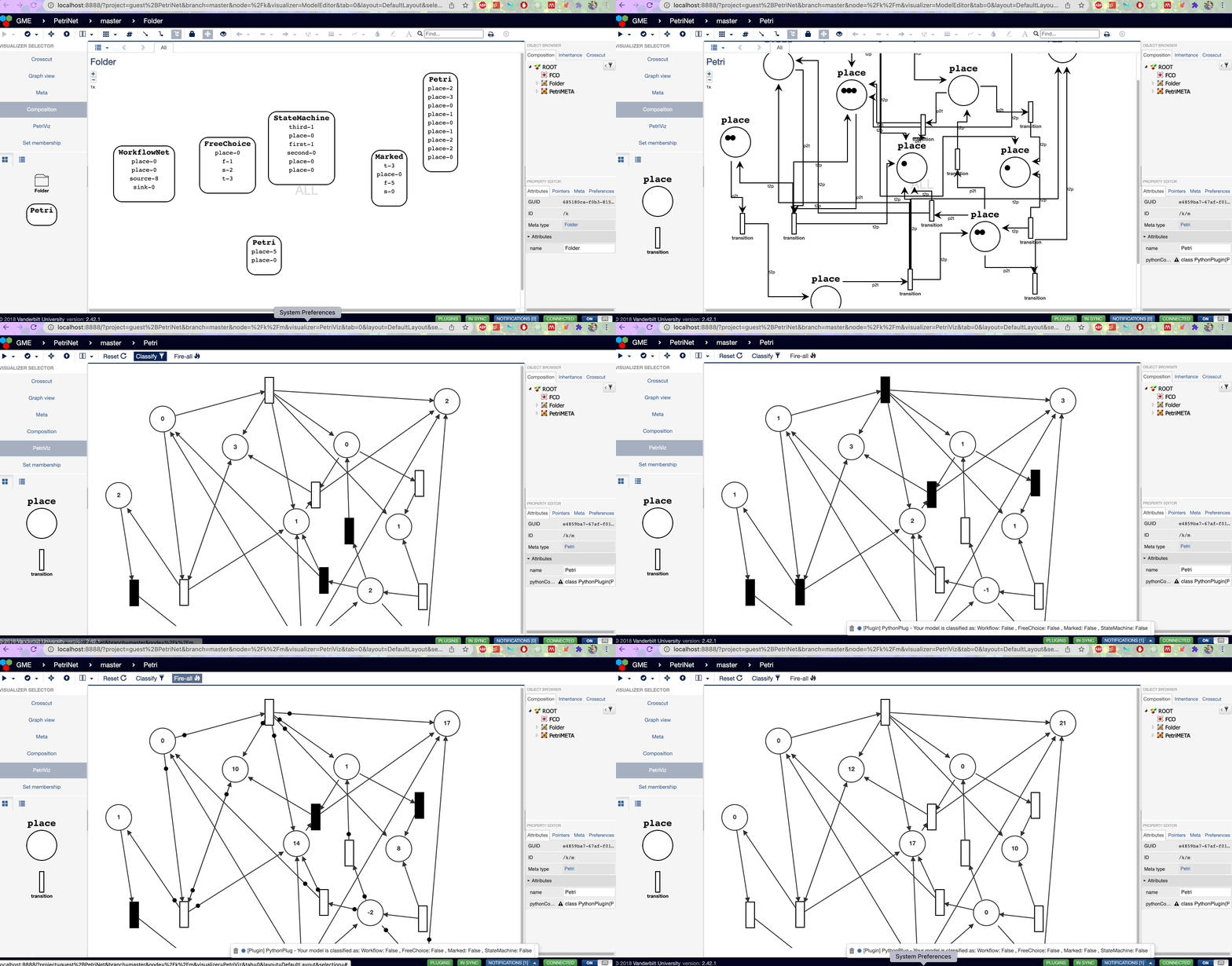
This is a design studio for building and simulating petri nets

Petri NetsDesign StudioSimulation
Explore
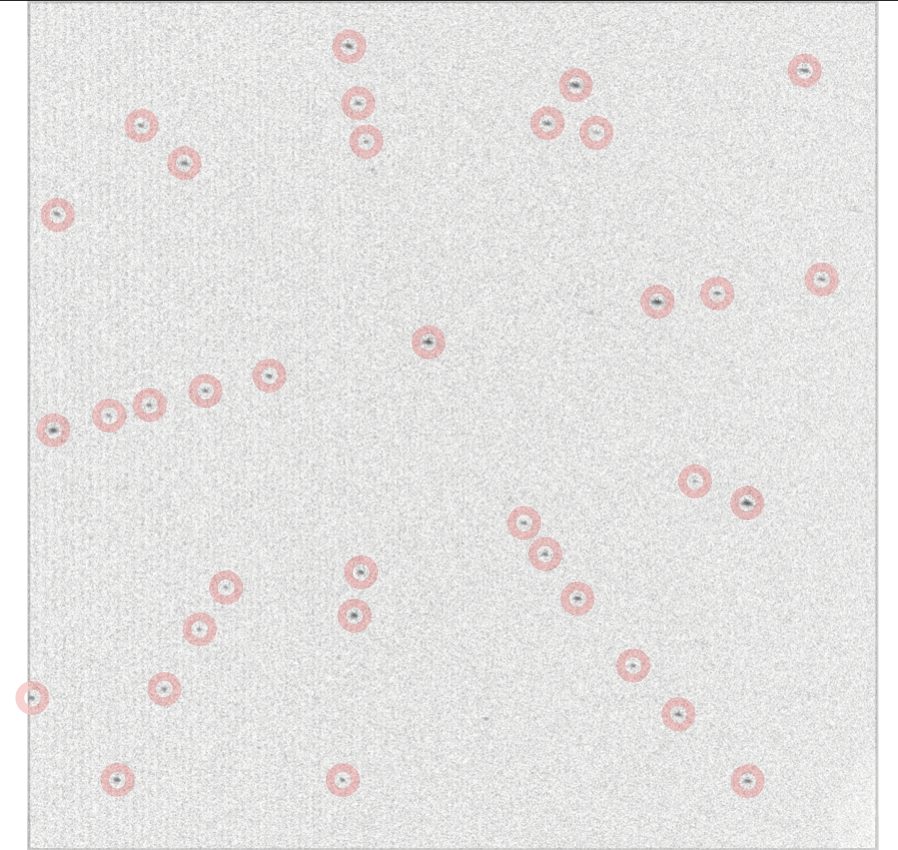
Robust areal diffraction peak detection based on Shannon entropy

Robust areal diffraction peak detection based on Shannon entropy

2022-03-02

This research project was on improving diffraction maxima identification in XRD data.

Oral PresentationXRDComputer Vision
Explore
Manifold-Slider

Manifold-Slider

2020-03-10

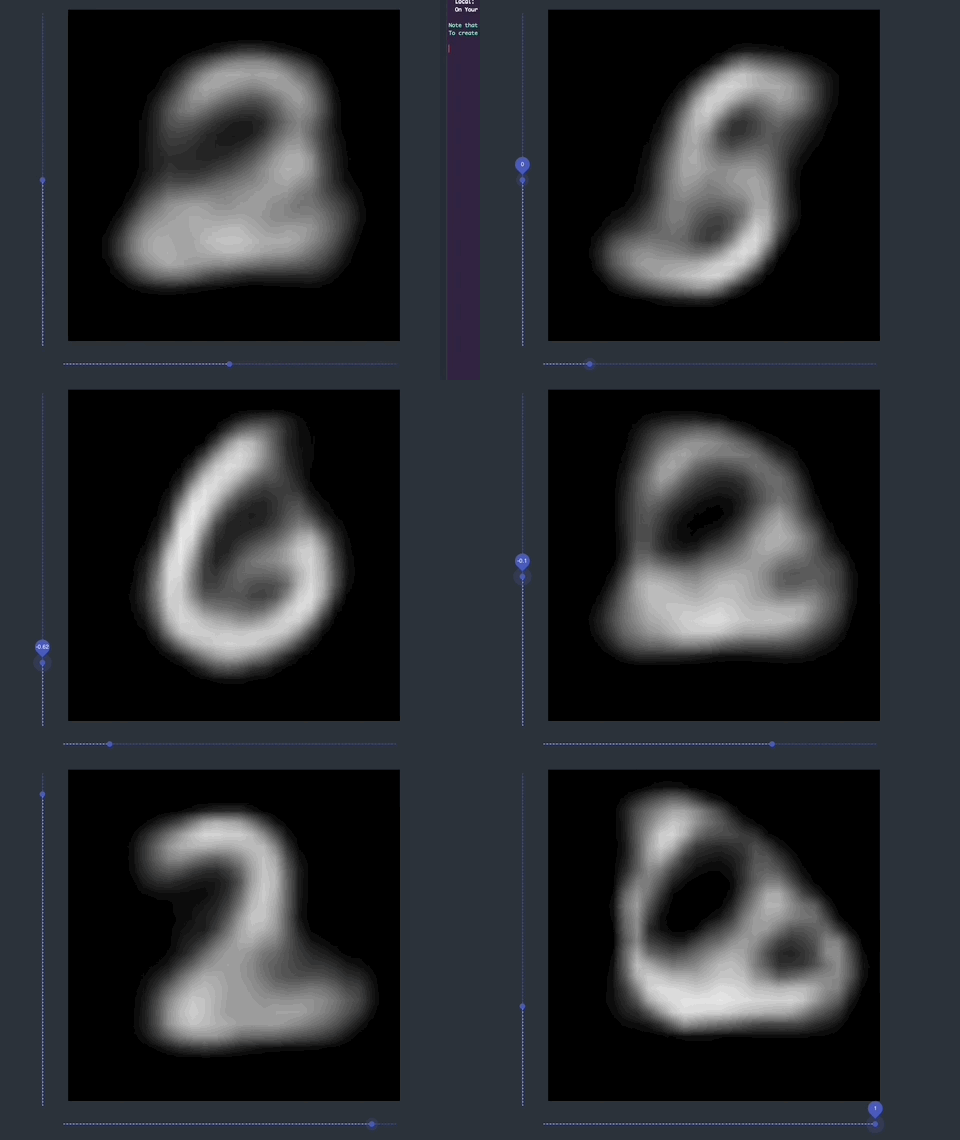
I trained a variational autoencoder neural network in python, then converted to tensorflow.js a python to javascript neural network converter, then built an interface and app with react.js to interact with the neural net

VAEReact.jsTensorflow.js
Explore
1D Fick Solution for Solid State Diffusion Python package

1D Fick Solution for Solid State Diffusion Python package

2019-12-25

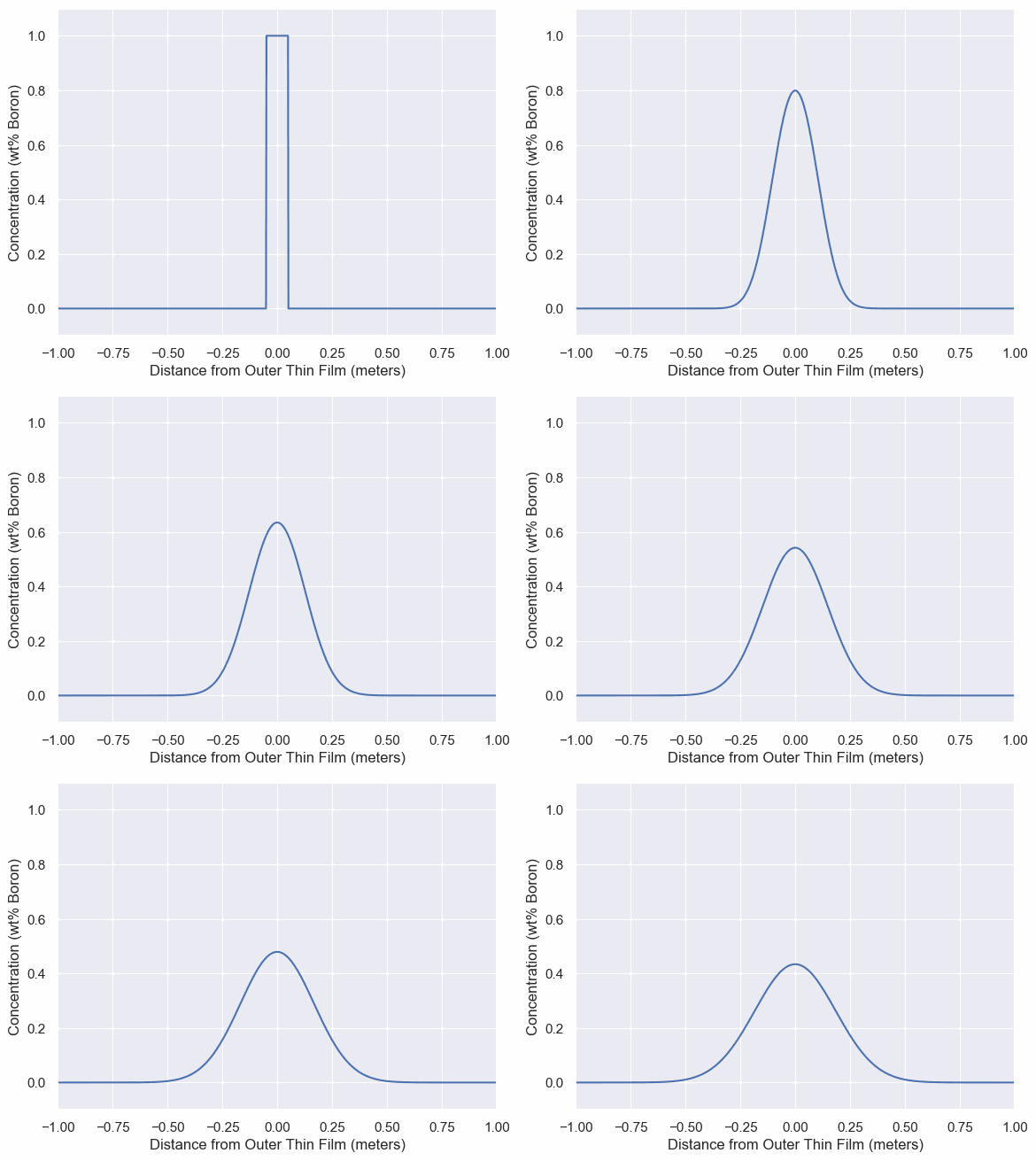
This is a Python package that I created in my free time during COVID. I saw that there was no open source python package for performing diffusion simulations with Fick's Second law of diffusion. This package could be used to model Solid state diffusion in the specified geometries.

DiffusionMaterial Science
Explore

Skills

skill icon

My primary language, with countless projects behind it. I build machine learning models in PyTorch, research and production code, and scientific packages for molecular simulation. I also work extensively with Claude to accelerate research and engineering.

skill icon

My go-to for performance and hardware. I've shipped several serious projects in C++, from high-performance computing to low-level systems work.

skill icon

PyTorch is where I build. I've trained equivariant graph neural networks, variational autoencoders, and sequence models โ€” writing custom layers, losses, and training loops rather than reaching for off-the-shelf architectures.

skill icon

I hold an honors degree in Statistics and use it daily โ€” time-series analysis, Bayesian and frequentist inference, experiment design, and the discipline of separating a real signal from an overfit one.

skill icon

High-performance computing: parallel and distributed code on GPU clusters and SLURM schedulers, profiling and optimizing hot paths, and running large simulation and training campaigns at scale.

skill icon

Some work here, mostly for things I want non-programmers to use โ€” like this website.


Adventures